What trachea is
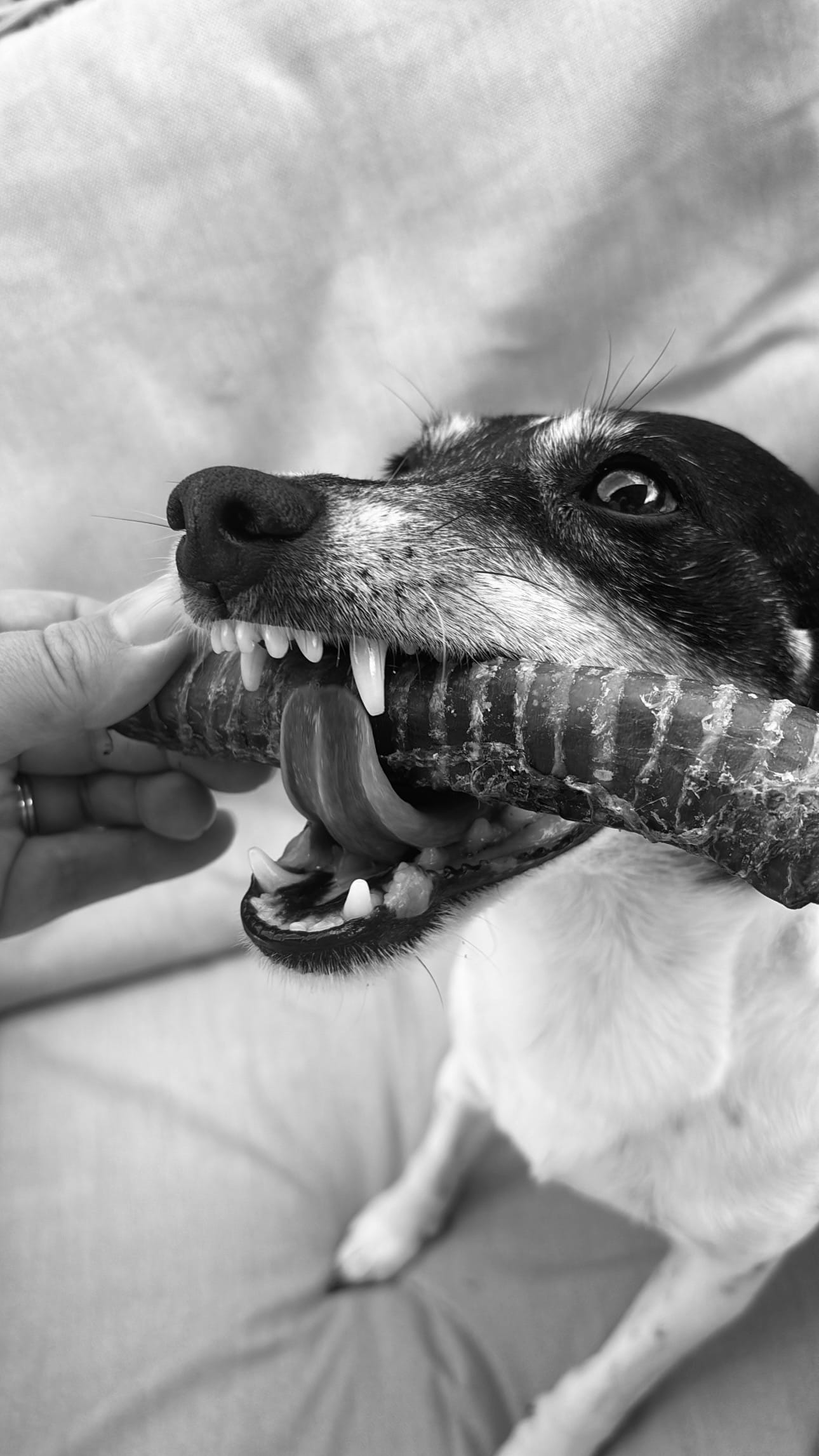
The trachea is the windpipe: the tube that carries air from the throat to the lungs. It is made of rings of cartilage joined by tissue, rather than muscle meat. Air-dried, it becomes a light, firm, ridged chew that most dogs take to straight away.
Most trachea chews sold in New Zealand are beef. Furmajesty usesvenison trachea, which is smaller and leaner, and venison is a novel protein for most dogs.
Is trachea good for teeth?
Plaque that is left on teeth hardens into tartar. When a dog works through a firm, fibrous chew, the ridges rub against the tooth surface and help scrape plaque away, particularly on the back teeth that are hardest to reach with a brush.
That makes trachea a useful helper, not a dental treatment. No chew replaces regular brushing or a dental check at the vet. If your dog has bad breath that does not go away, red gums or a broken tooth, see your vet.
Glucosamine and chondroitin
Cartilage naturally contains glucosamine and chondroitin, the same compounds sold in joint supplements. That is why trachea is often described as good for joints.
It is worth being precise about what that means. A trachea chew contains these compounds as part of the food. How much a dog absorbs from a chew, and what it does for the joints, has not been well studied, and a chew is not a measured dose. If your dog is stiff, limping or slowing down, talk to your vet about joint care rather than relying on treats.
Is trachea safe?
For most healthy adult dogs, trachea is one of the gentler chews. Cartilage bends and crunches rather than splintering into sharp shards the way cooked bone can, and air-dried trachea has no added chemicals, glycerine or smoke flavouring.
The risks are the ones that come with any chew:
- Swallowing a piece whole. Gulpers are most at risk near the end of the chew.
- Too much at once. Several chews in a day can upset a stomach.
- Sensitivities. A dog can react to any protein. Introduce trachea on its own so you can tell if it agrees with your dog.
If your dog vomits, has diarrhoea, gags or seems uncomfortable after a chew, stop and check with your vet.
How to feed it safely
- Always supervise. Chews are not something to leave a dog alone with.
- Choose a piece longer than your dog can fit in its mouth.
- Take the chew away once it is small enough to swallow whole.
- Give it after exercise or in a quiet moment, not when the dog is excited and likely to gulp.
- Have fresh water available.
- Store chews sealed in a cool, dry place.
How often
For most adult dogs, a trachea two or three times a week sits comfortably alongside normal meals. A common rule of thumb from vets is to keep all treats to around 10% of a dog's daily food, so the main diet still does the nutritional work. Small dogs need shorter pieces and fewer of them.
Can puppies have trachea?
We recommend keeping trachea for dogs over 12 months. Puppy teeth and jaws are still developing, and young dogs are more likely to gulp a piece. Until then, a soft treat such asair-dried lamb lung is a better choice: it tears by hand into tiny pieces.
Trachea vs bully stick vs rawhide
The three most common long chews do different jobs:
- Trachea: cartilage, light and ridged. Contains glucosamine and chondroitin, and is usually lower in fat than denser chews. A good everyday chew for moderate chewers.
- Bully stick: dried pizzle, very dense and long-lasting, with a strong smell. Higher in calories, so better as an occasional chew for power chewers.
- Rawhide: processed animal hide. It softens into large, tough pieces that some dogs struggle to digest, which is why many owners prefer single-ingredient chews instead.
Whatever the chew, the same rules apply: supervise, size it to your dog, and take the last piece away. For a side-by-side table, seetrachea vs bully stick vs rawhide.
Beef or venison trachea?
Both are cartilage and do the same job. Beef trachea is larger, so it suits big dogs and power chewers. Venison trachea is smaller and leaner, which suits medium dogs and moderate chewers. Venison is also a novel protein for most New Zealand dogs, so it is often chosen for dogs that react to beef or chicken.
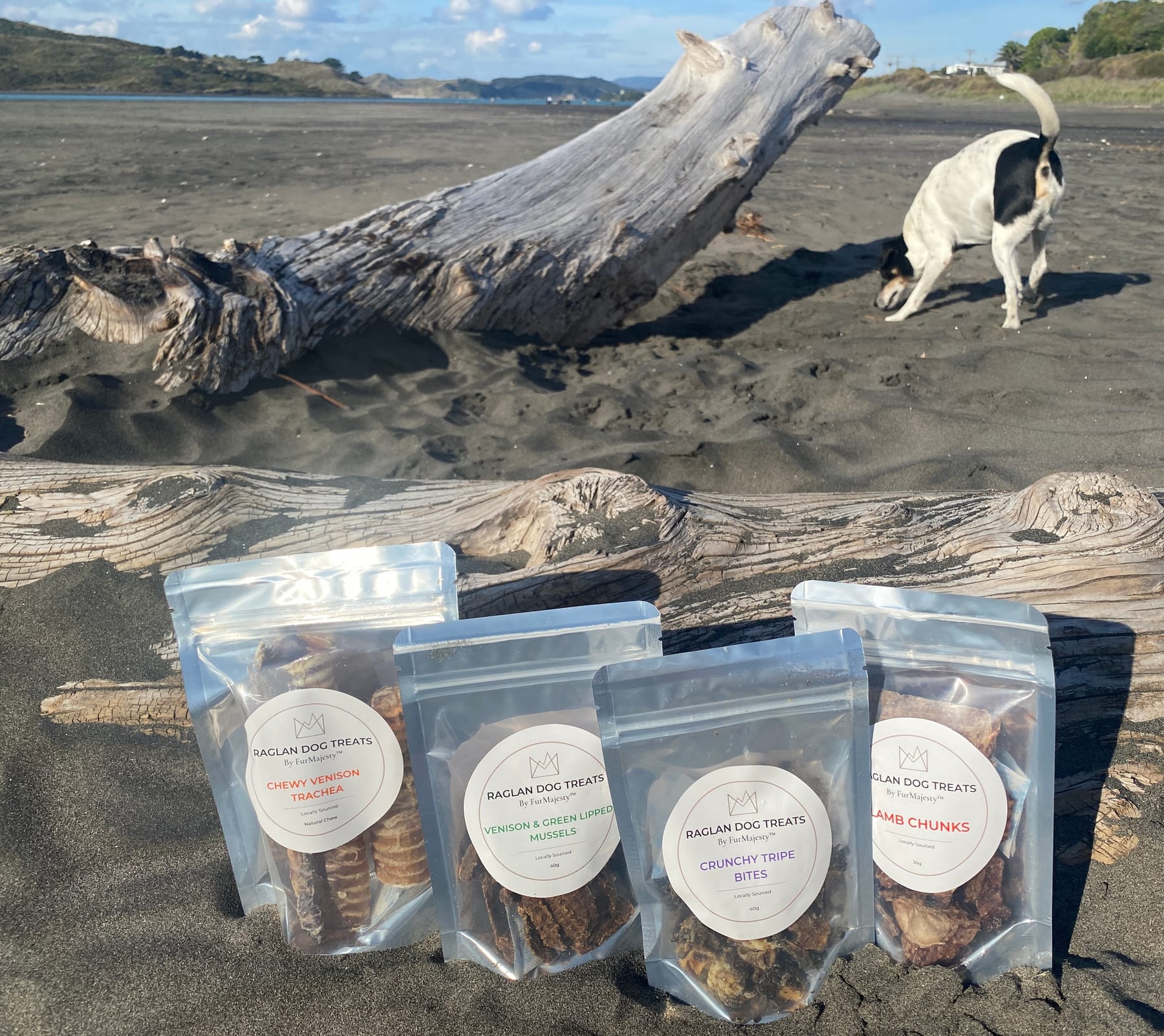
Furmajesty Venison Trachea is 100% New Zealand venison trachea, air-dried with nothing added. For more on choosing simple treats, seewhat single protein dog treats are.
This guide is general information about treats, not veterinary advice. If your dog has a known allergy, a medical condition or is on a prescribed diet, check with your vet before introducing a new food.