The 10% rule
Vets commonly suggest that treats make up no more than about 10% of a dog's daily calories. The other 90% should come from a complete and balanced main food.
Two reasons it matters:
- Treats are rarely complete food, so too many can unbalance the diet.
- Treat calories add up quickly, and extra weight is hard on joints.
Treat allowance by weight
The table shows an approximate daily calorie need for a healthy, desexed adult dog at a typical activity level, and 10% of that as a treat allowance.
| Dog's weight | Size | About this many calories a day | Treat allowance (10%) |
|---|---|---|---|
| 3kg | Toy | 260 | About 25 calories |
| 5kg | Toy | 370 | About 35 calories |
| 10kg | Small | 630 | About 65 calories |
| 20kg | Medium | 1,060 | About 105 calories |
| 30kg | Large | 1,440 | About 145 calories |
| 40kg | Large | 1,780 | About 180 calories |
| 50kg | Giant | 2,110 | About 210 calories |
What that looks like in practice
Calorie numbers for treats vary a lot with the size of each piece and how they are made, so it helps to think in types of treat as well as numbers:
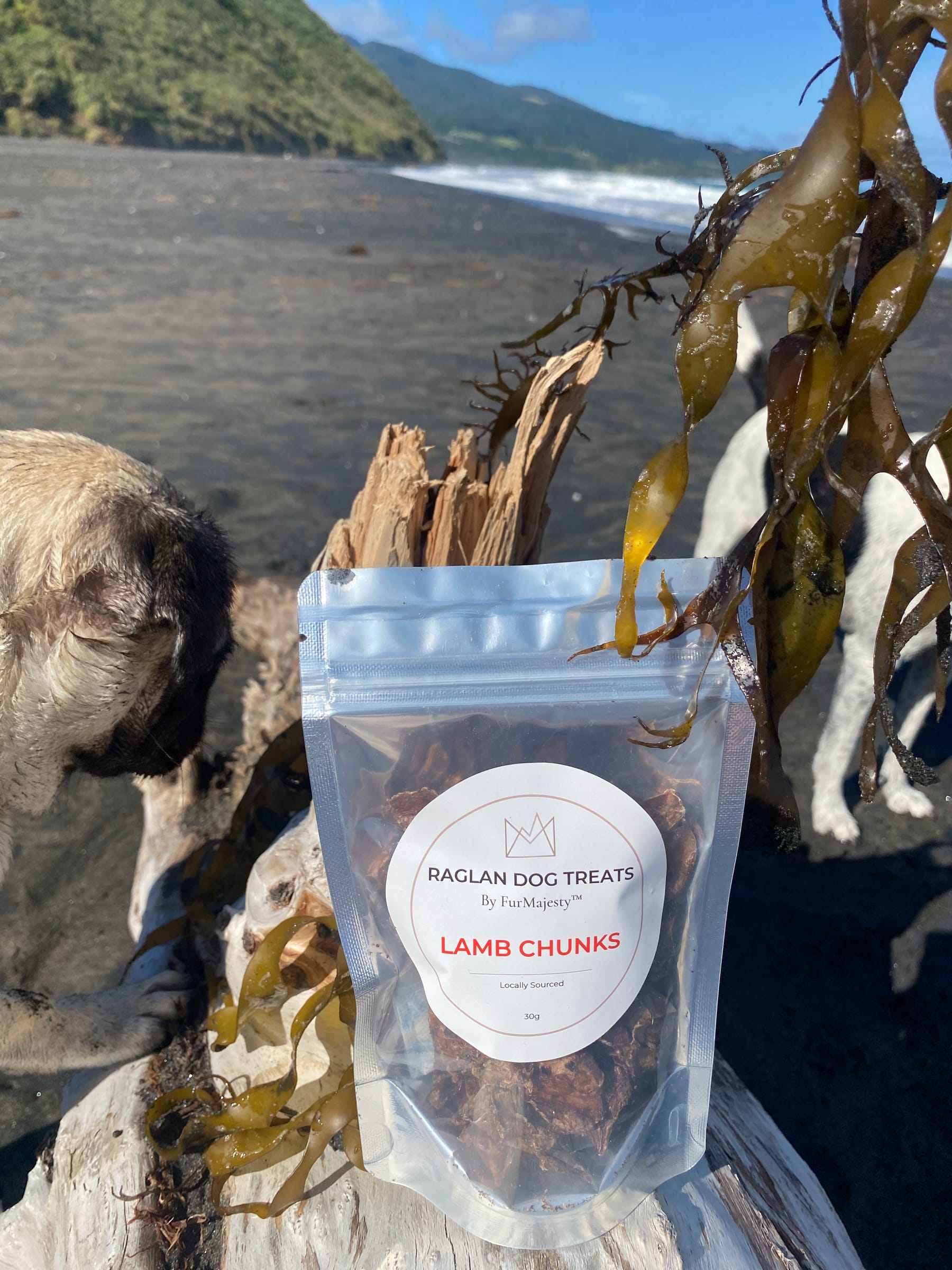
- Light, lean treats such as air-dried lamb lung give you many small rewards within the allowance.
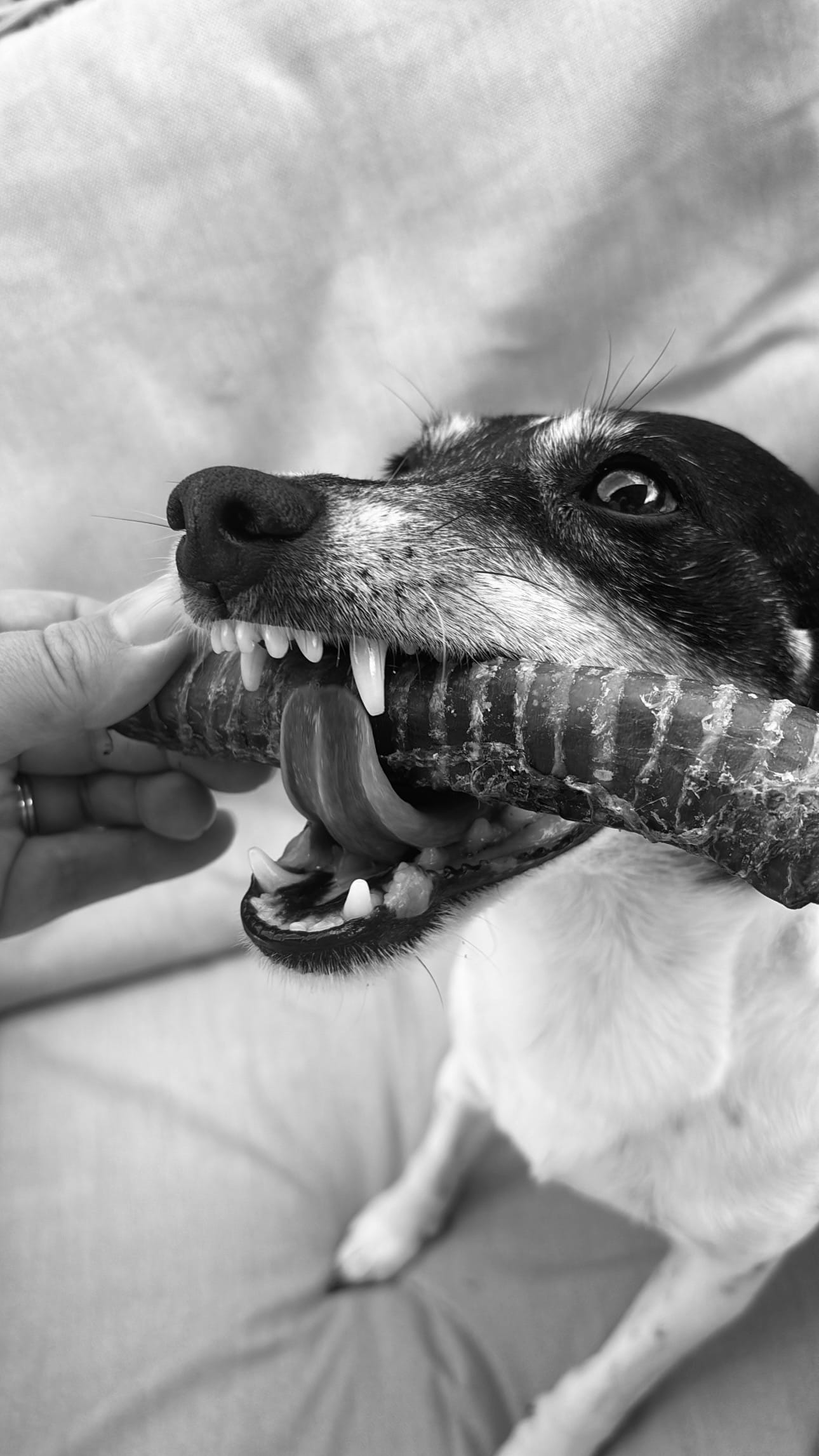
- Long chews such as trachea use more of the allowance in one go. Two or three a week suits most adult dogs.
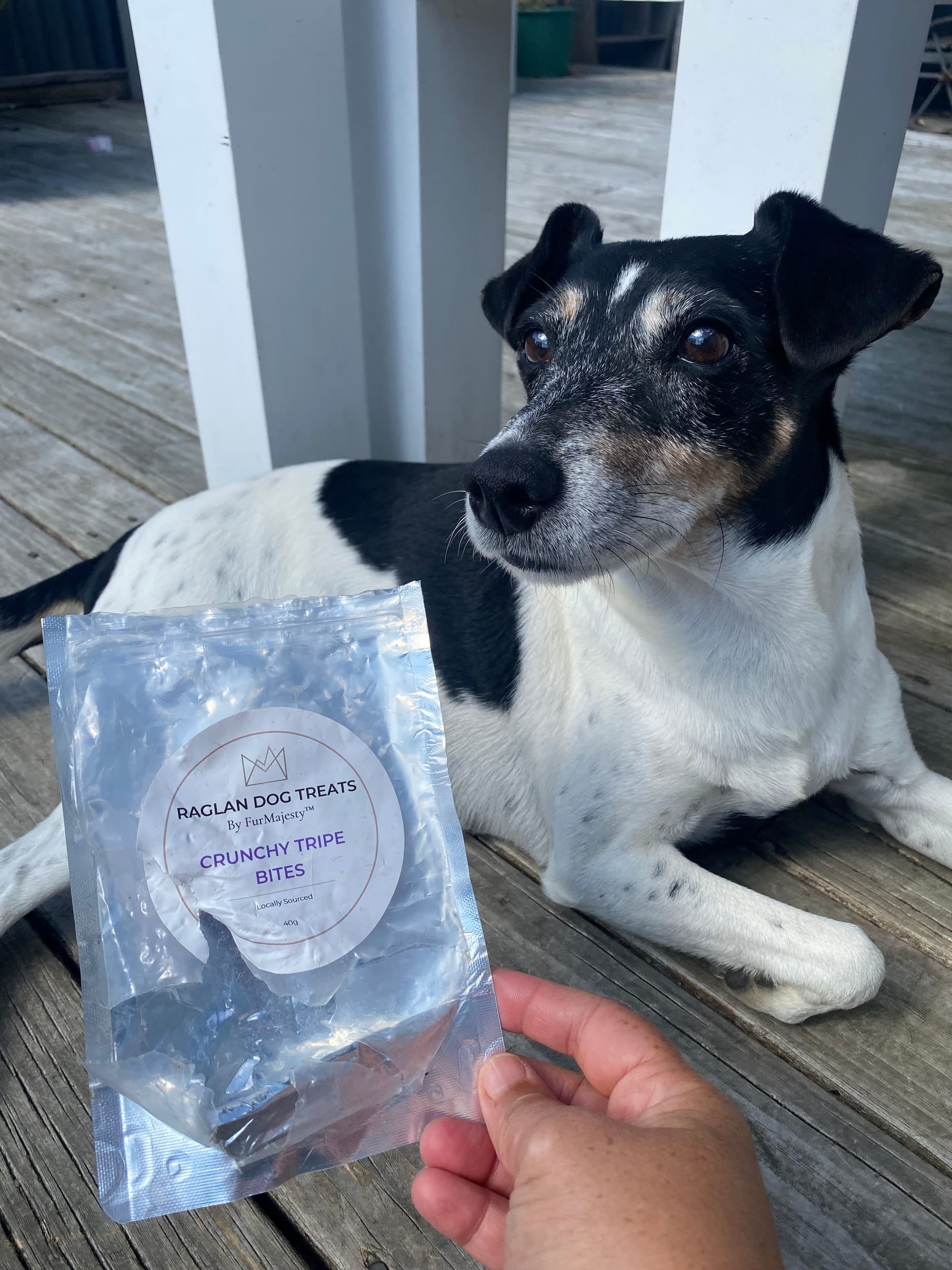
- Rich treats such as green tripe are best in small amounts, or as an occasional favourite.
A simple habit helps: decide the day's treats in the morning, keep them in a small container, and stop when it is empty.
Training days
Training can mean dozens of rewards in one session. Keep the total the same by making every reward tiny, around the size of a pea, and choosing lean treats. On a heavy training day, reduce the next meal slightly to make room.
Puppies
Puppies need more food for their size because they are growing, and their needs change month to month, so the adult table above does not apply. Use the 10% guide against your puppy's daily food instead, and stick to soft, lean treats in tiny pieces. See which treats suit puppies.
Dogs losing weight
If your dog is on a weight-loss plan, ask your vet how treats fit in. Many vets suggest taking treats out of the daily food allowance rather than adding them on top, and switching to the leanest treats you can find. Some owners set aside a few pieces of the dog's normal food to use as rewards.
Making treats go further
- Break treats into smaller pieces. Dogs care more about how often they are rewarded than how big the reward is.
- Save the highest-value treats for the hardest moments, such as recall.
- Use lean treats for everyday rewards and keep rich ones for occasional use.
- Count chews: a long chew can use up much of a small dog's allowance.
This guide is general information about treats, not veterinary advice. If your dog has a known allergy, a medical condition or is on a prescribed diet, check with your vet before introducing a new food.