What green tripe is
Tripe is the lining of the stomach of a grazing animal, usually a cow or sheep. Cattle have a stomach with several compartments, and this is where grass is broken down before it moves on.
Green tripe is that lining after it has been cleaned but not bleached or scalded. The word "green" means unprocessed, not a colour. Green tripe is usually grey, brown or khaki, and it is the kind dogs are fed, either raw as part of a meal or air-dried as a treat.
Green tripe vs white tripe
White tripe is what you see at the butcher for human recipes. It is the same tissue, but it has been scalded and bleached until it is pale and nearly odourless. That makes it cleaner-looking for the dinner plate, but it also removes the smell and much of the flavour.
- Green tripe: cleaned only. Strong smell, strong flavour, made for dogs.
- White tripe: scalded and bleached. Mild smell, made for people.
For a dog treat, green is the one you want.
Why tripe smells
The stomach lining is where a grazing animal ferments grass, and the smell of that process stays in the tissue. Raw green tripe is famously pungent. Air-drying removes the moisture and softens the smell a lot, but dried green tripe still has a strong, earthy aroma that you will notice when you open the bag.
A few practical tips: keep the bag sealed, wash your hands after handling it, and expect your dog's breath to smell of it for a little while afterwards.
Why dogs love it
The smell that puts people off is exactly what dogs are drawn to. That makes green tripe one of the most reliable treats for:
- Fussy eaters who turn their nose up at other treats
- High-value training rewards when you need full attention, such as recall
- Tempting a dog back to food after a change of routine
Air-dried tripe bites are crunchy and snap into smaller pieces, so one bag goes a long way in training. For more on picky dogs, see our guide totreats for fussy dogs.
What about enzymes and probiotics?
You will often read that green tripe is full of digestive enzymes and probiotics. Raw green tripe is described that way because it comes straight from the stomach. How much of that survives drying, and what it does for a dog's gut, has not been well established.
So we do not make those claims for dried tripe treats. What we can say plainly is that green tripe is a single-ingredient, high-protein treat that dogs love. If you are looking for gut support for a dog with digestive problems, talk to your vet.
Sensitive stomachs
Because it is one ingredient, green tripe is easy to try with a sensitive dog: if something does not agree with them, there is only one thing to look at. Introduce it on its own, starting with a small piece, and wait a day or two before giving more.
Tripe is also one of the richer treats, higher in fat than lean options such as lung or trachea. If your dog is on a low-fat diet, is overweight, or has had pancreatitis, check with your vet before giving it. A lean treat such as air-dried lamb lung is usually the safer pick.
How much, and how often
A common rule of thumb from vets is to keep all treats to around 10% of a dog's daily food. Within that, tripe works best in small amounts: a few bites for a small dog, a little more for a large one.
Many healthy adult dogs can have a little most days. Because it is rich, many owners keep it as an occasional favourite or a training reward, and use leaner treats for everyday snacks.
Can puppies eat tripe?
We recommend keeping dried tripe for adult dogs, because it is rich and puppies' stomachs are still settling. For a puppy, a lean, soft treat such as lamb lung is a better choice: it tears by hand into tiny pieces.
Side effects to watch for
- Loose stools or an upset stomach, usually from too much at once or a sudden change
- Smelly breath, which is normal and passes
- Weight gain, if tripe becomes a large part of the daily food
If your dog vomits, has diarrhoea that does not settle, or seems unwell, stop giving it and check with your vet.
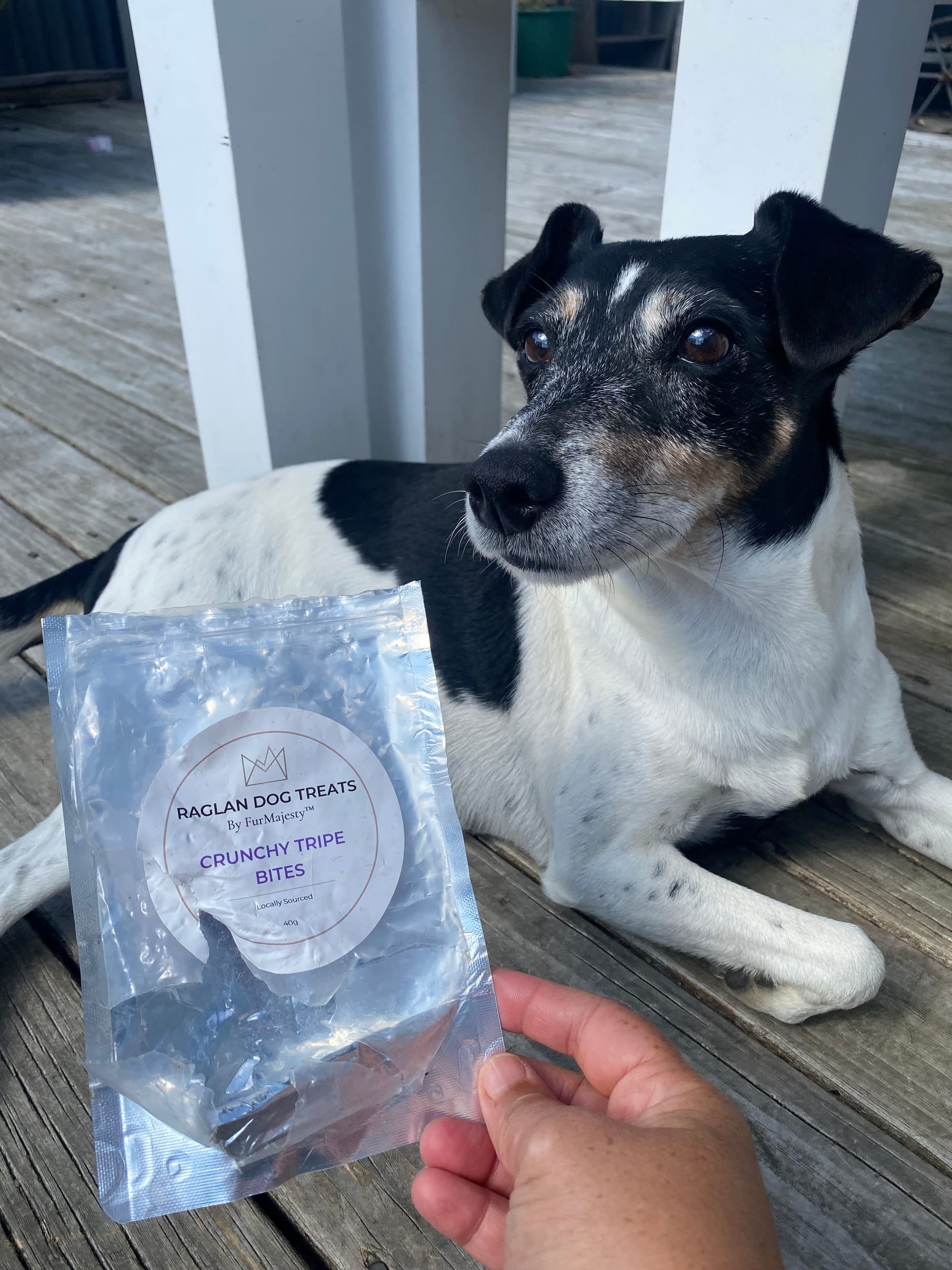
Furmajesty Crunchy Green Tripe Bites are 100% New Zealand beef green tripe, air-dried with nothing added. For more on simple treats, seewhat single protein dog treats are.
This guide is general information about treats, not veterinary advice. If your dog has a known allergy, a medical condition or is on a prescribed diet, check with your vet before introducing a new food.