Read the back, not the front
The front of a treat packet is marketing: "natural", "premium", "beef flavour", a picture of a steak. The ingredient list on the back is what tells you what is actually inside. Ingredients are usually listed from most to least, so the first few make up most of the treat.
Label detail varies a lot between brands. That is exactly why it pays to read it yourself rather than rely on the name.
Unnamed proteins
Be wary of protein ingredients that do not name the animal:
- "meat" or "meat meal"
- "animal digest" or "animal by-products"
- "animal fat" or "poultry fat"
- "meat and meat derivatives"
These are not necessarily harmful, but you cannot tell which animal they came from. For a dog with a sensitivity, that is the problem. A treat sold as "lamb" can include chicken this way. More indog treats without chicken.
Added sugar and salt
Dogs do not need added sugar, but it turns up in treats to improve taste and texture. Look for sugar, glucose, corn syrup, molasses, honey and dextrose. Added salt is also common, especially in jerky-style and savoury treats. Small amounts are not dangerous for a healthy dog, but they are a sign of a more processed treat and add up over a day.
Colours and preservatives
Treats come in bright colours for the owner, not the dog. Dogs do not care what colour a treat is, so artificial colours add nothing for them.
Some artificial preservatives, such as BHA, BHT andethoxyquin, have raised concerns, and many owners prefer to avoid them. Natural preservatives such as mixed tocopherols (vitamin E) or rosemary extract are common alternatives. Plain air-dried treats often need no added preservative at all, because removing the moisture is what keeps them.
You may also see glycerine or propylene glycol in soft, chewy treats. They keep the treat moist. They are widely used, but they are a sign of a more processed treat than a plain dried one.
Ingredients that are toxic to dogs
These should never be in a dog treat, but they do turn up in human food that gets shared with dogs:
- Xylitol (also listed as birch sugar), found in some sugar-free foods and peanut butters
- Chocolate and cocoa
- Grapes, raisins, sultanas and currants
- Onion and garlic, including powders
- Macadamia nuts
- Cooked bones, which can splinter
If your dog eats any of these, contact your vet straight away, even if they seem fine.
Where it was made
A clear country of origin tells you where the ingredients came from and where the treat was made. Look for wording that says both, not just "packed in". Some imported jerky treats have been linked to illness in dogs overseas, which is one reason many New Zealand owners look for treats made here from local ingredients.
What a good label looks like
A good treat label is short and specific:
- a named animal protein, such as "lamb lung" or "venison trachea"
- as few ingredients as possible, ideally one
- a clear country of origin
- a feeding guide and a best-before date
- storage instructions
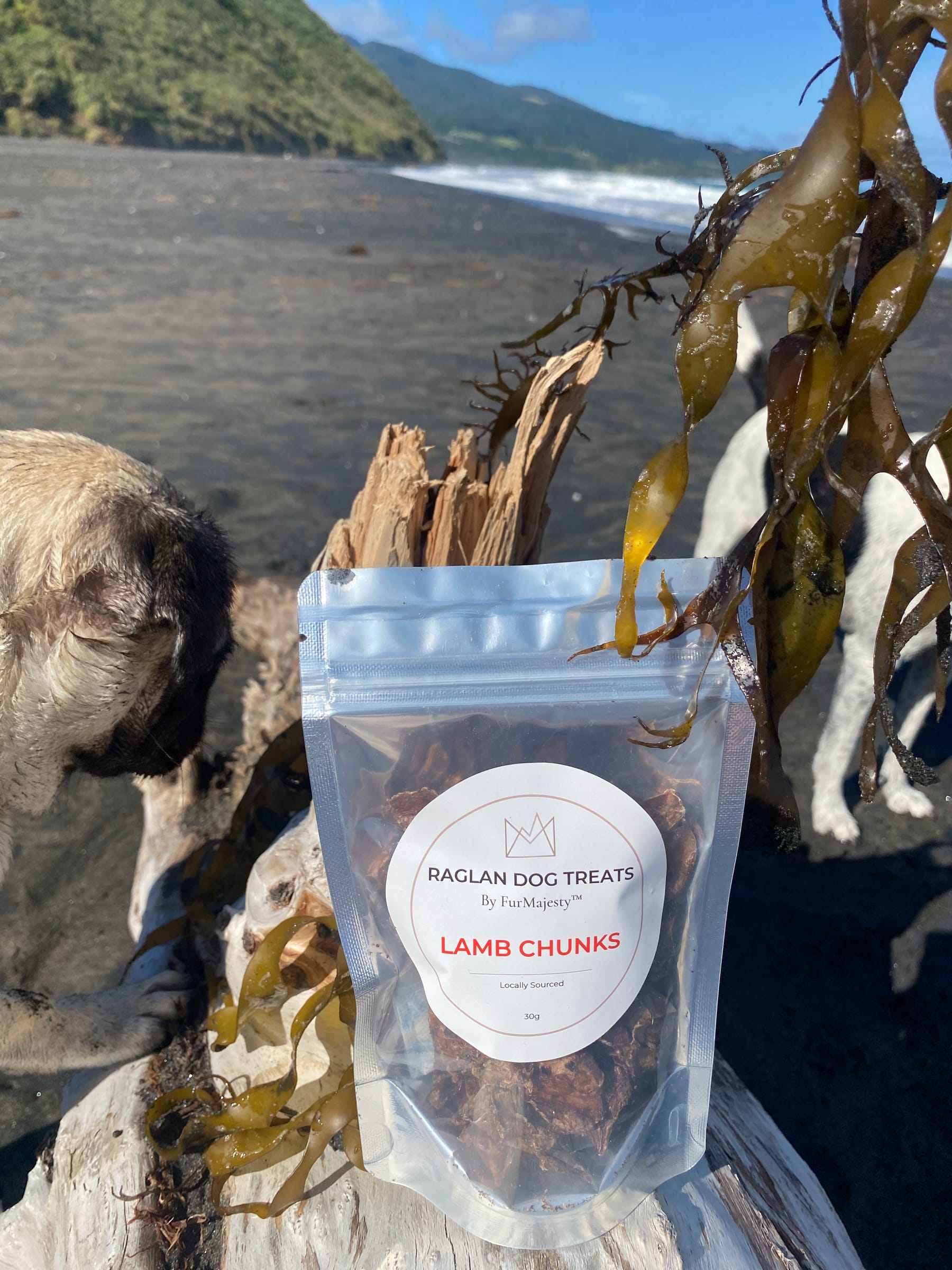
For example, the ingredient list on Furmajesty Lamb Lung Chunks reads "100% Lamb Lung". There is nothing else to check.
A quick checklist
- Is every protein named?
- Is there added sugar, salt or colouring?
- Are there artificial preservatives such as BHA, BHT or ethoxyquin?
- Is anything on the list toxic to dogs?
- Does it say where it was made and where the ingredients came from?
- Could you list everything in it from memory? If so, that is a good sign.
For more on choosing simple treats, see what single protein dog treats are.
This guide is general information about treats, not veterinary advice. If your dog has a known allergy, a medical condition or is on a prescribed diet, check with your vet before introducing a new food.